
The city is at 2,200 meters of altitude surrounded by mountains that exceed 3,000 meters. Listed as a World Heritage Site by UNESCO, the old city has no more than 6,000 narrow and tall houses, more than a hundred mosques, a dozen baths, and thirty Koran schools.
Sana’a, the capital of Yemen, is the largest open-air museum in the world. But unlike any museum, it is full of life. Buildings of extravagant beauty unequaled anywhere else in the world observe a lifestyle unchanged since the Middle Ages: women covered from head to toe, here and there weapons shops where one can buy anything from a saber to a kalashnikov, storytellers that fascinate people with their stories and legends.
Its architecture expresses the appreciation of each Yemenite for their house. Most of them live in authentic 6-8 story medieval palaces built 5 centuries ago. This means that the houses continue to belong to a single patriarchal family that welcomes the families of their children and can live together three generations.
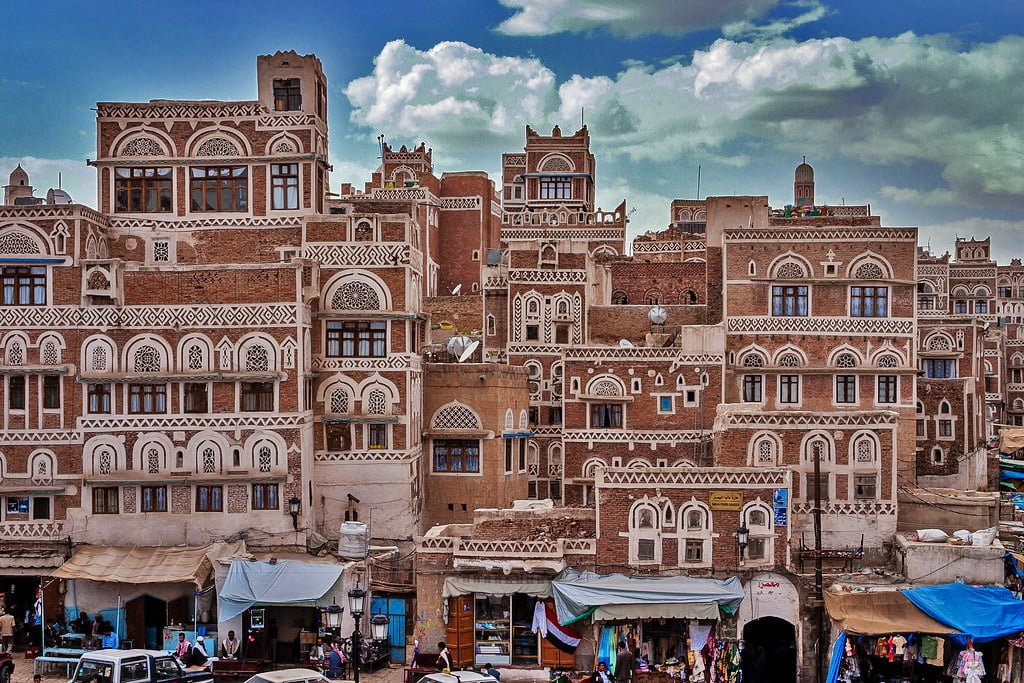
Sana’a
Going through the magical frame of the Bab-al-Yemen gate, I have to sit in a corner of the square, I don’t believe what I’m seeing. I am entering the oriental tales and fantasies of my most intimate childhood. I am living them, I have them in front of me.
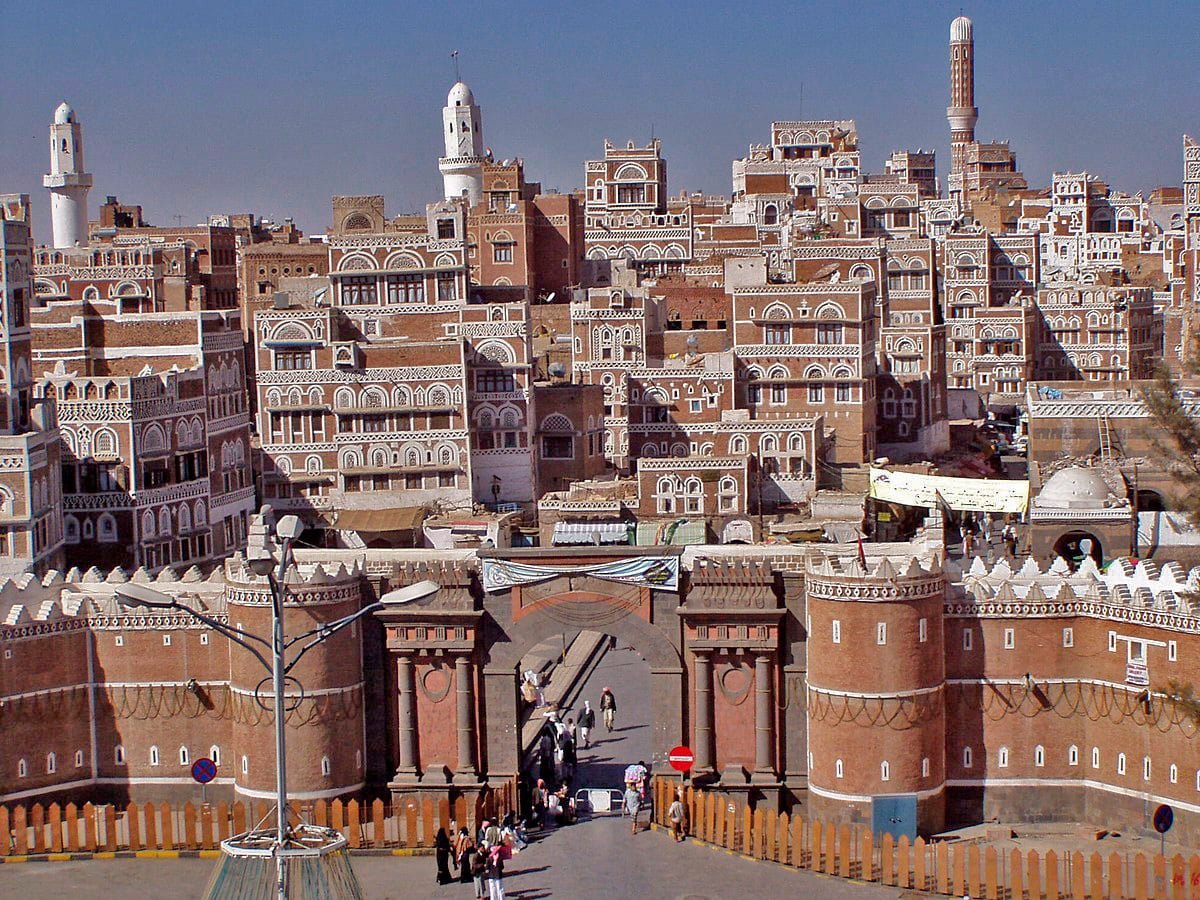
Bab Al Yemen Gate, Sana’a
The small merchants, the sellers of second-hand clothes, the Jews selling silverware, the Bedouins with vacant eyes and burnt faces. The old city displayed before me all the colors and flavors, all the images of a country that I believed existed only in my imagination. They were biblical images.

Sana’a market alley
The fascinating market, or souk, is one of the oldest in the Arab world. It extends through the center of the Old City, constituting a spider web of alleys, passages and corridors, some of them protected by awnings, plastic or faded umbrellas. But despite the apparent disorder, they are organized by guilds: the jewelers, jambia sellers, spices, fruits, nuts and dates, tea and coffee, antiques (rather trinkets), tools of the house, various foods, clothes, sandals, etc. etc.
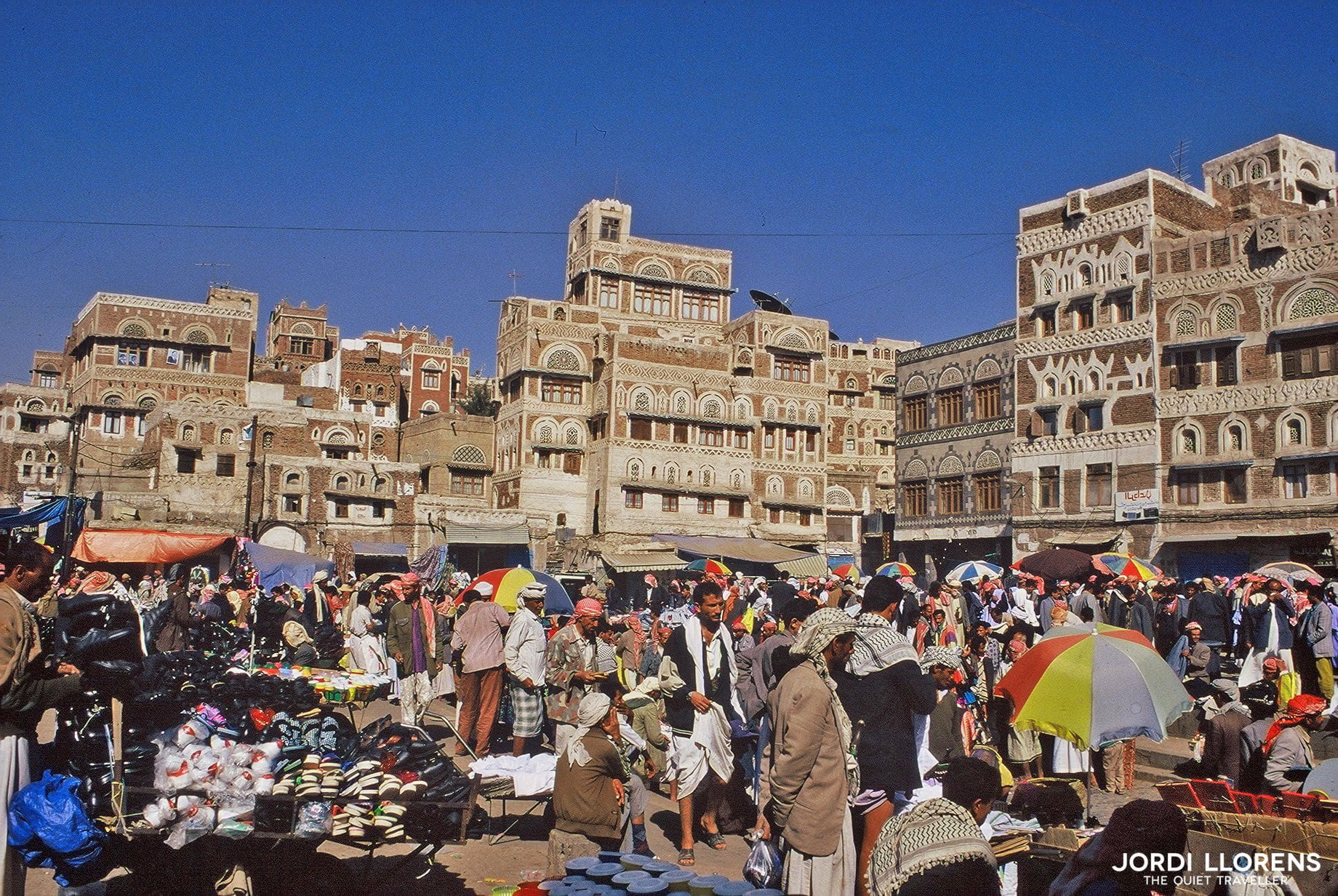
Sana’a Market
All three senses are highlighted in the Sanaa souk: sight, hearing and smell.
- With the eyes you can see a multitude of articles that are always simple and primary, old-fashioned, with a design that is somewhere between naïve and impersonal.
- Through the ear the activity of the souk is calibrated: crowing of the roosters, cries of offers.
- An endless number of colors, aromas and bad odors enter through the sense of smell.
The spell of eternal Arabia meets and blends: frankincense and myrrh, oils and perfumes, pepper and cardamom, cinnamon, vanilla and saffron.